
Some heroes don’t wear capes. Some walk on four legs—except one of them is artificial.
Years ago, a young elephant named Mosha wandered through a forest in Southeast Asia, unaware that a hidden landmine lay beneath her feet. In an instant, her childhood changed forever. The explosion destroyed one of her front legs, leaving the frightened calf fighting not only for survival but for the chance to walk again.
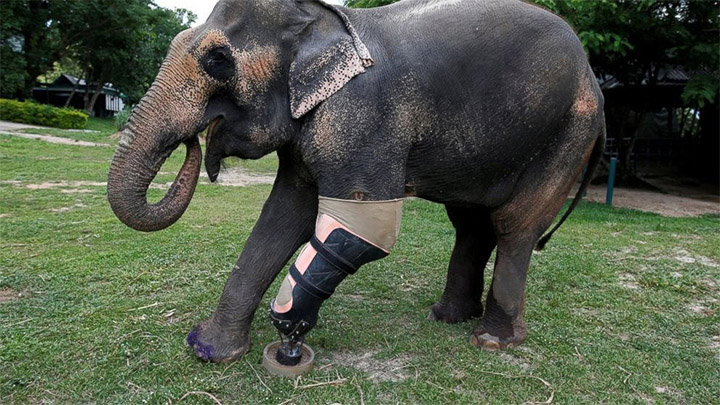
As a wildlife conservation specialist, I have witnessed countless stories of resilience, but Mosha’s journey remains one of the most extraordinary examples of how compassion and innovation can transform a life.
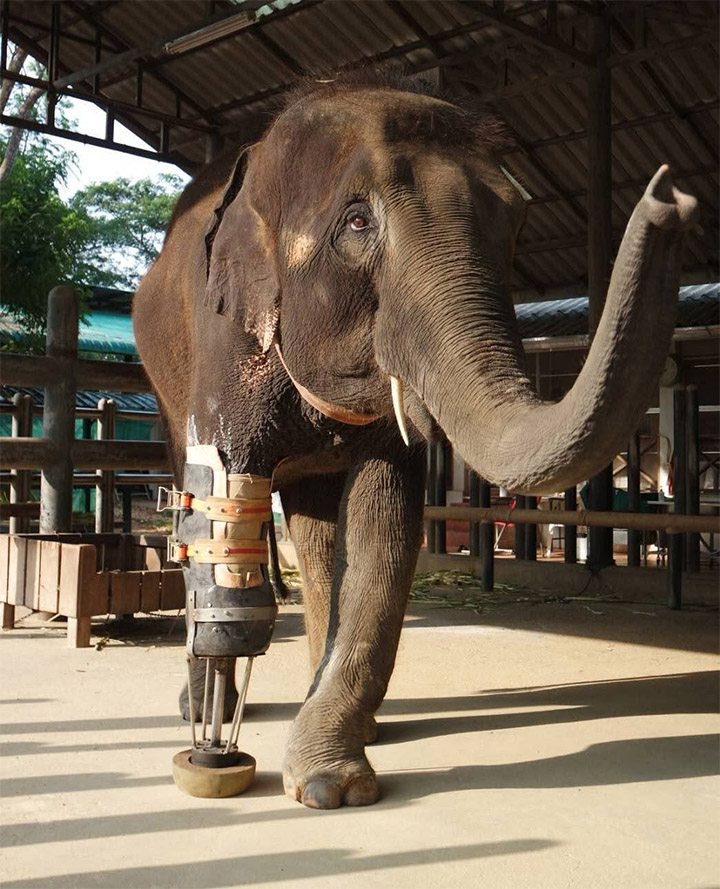
When rescuers brought the injured calf to Thailand’s elephant hospital, her future looked uncertain. Without the support of four healthy legs, elephants often develop severe spinal problems and life-threatening complications from carrying their enormous weight unevenly. Many believed she would never survive.
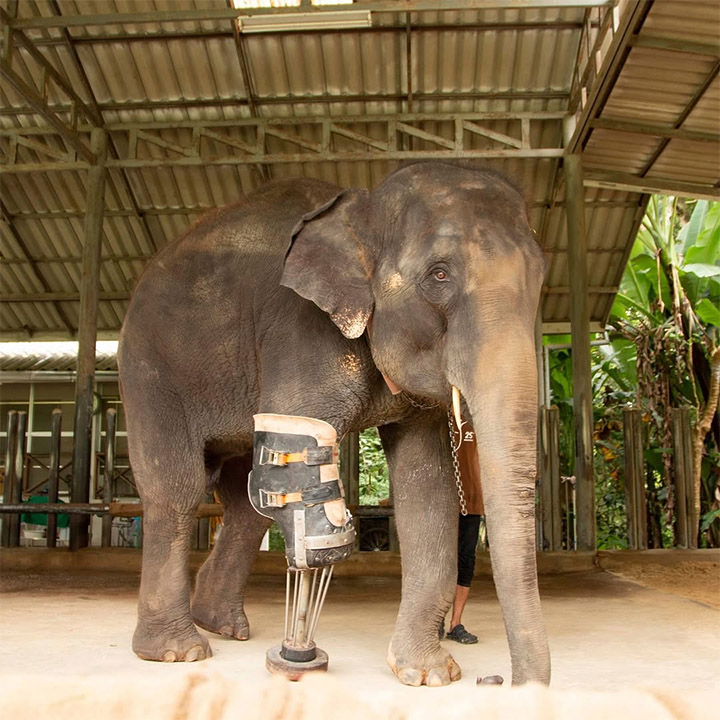
But a dedicated team of veterinarians, engineers, and caregivers refused to give up.
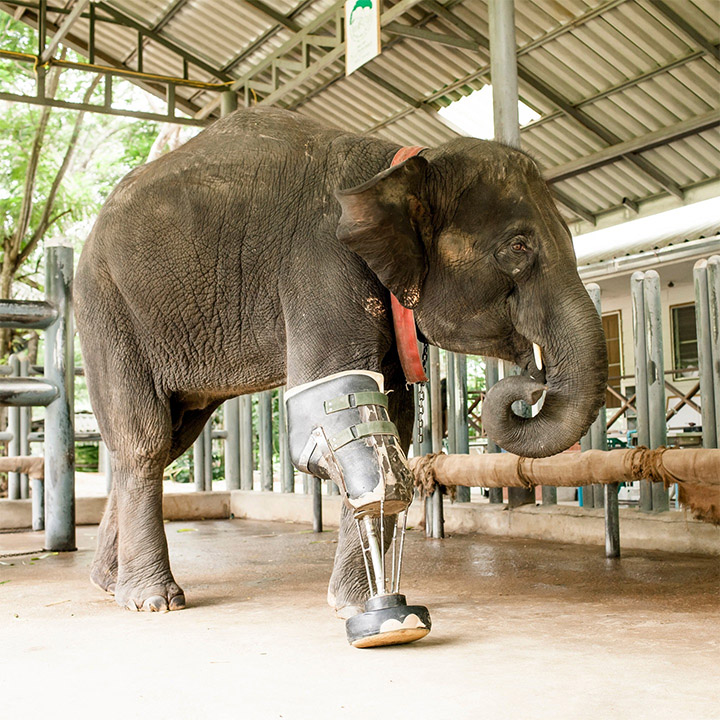
Together, they created the world’s first prosthetic leg designed specifically for an elephant. It wasn’t a one-time solution. As Mosha continued to grow from a 600-kilogram calf into a magnificent adult weighing more than two tons, each prosthetic had to be redesigned—longer, stronger, and more durable than the last.
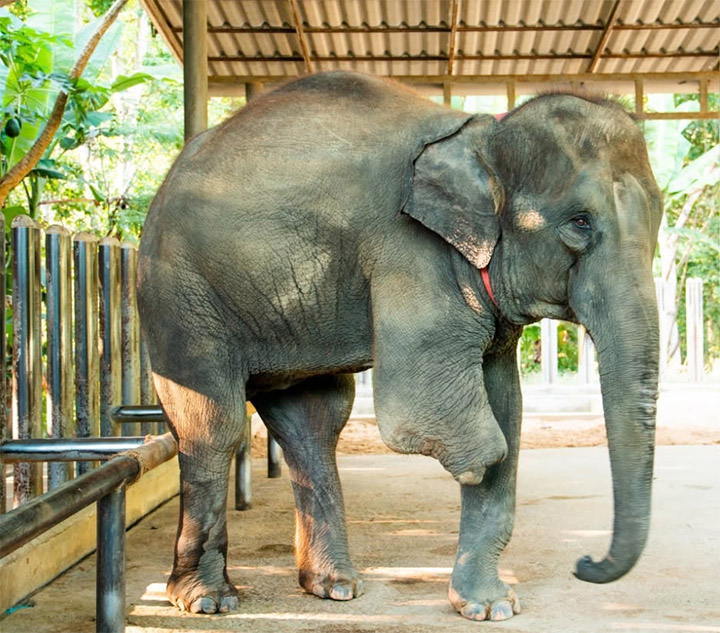
Every new leg represented another chance to keep moving forward.
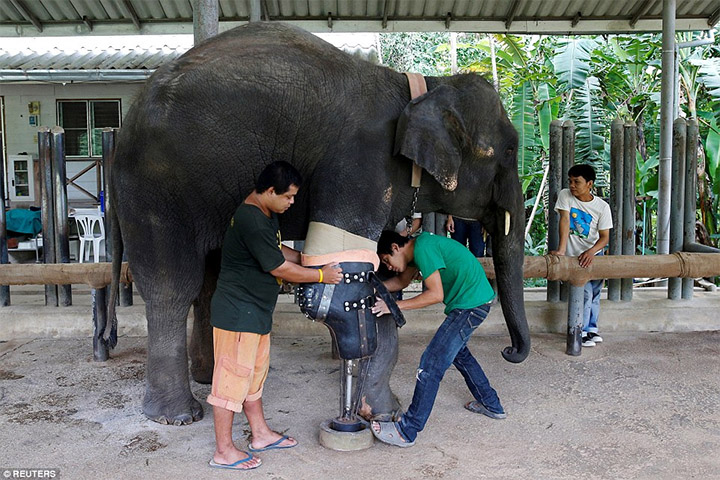
Mosha was not alone. Another elephant, Motola, who had also lost a leg after stepping on a landmine, began the same remarkable journey. Today, both elephants continue to receive specialized care, proving that even devastating injuries do not have to define a life.
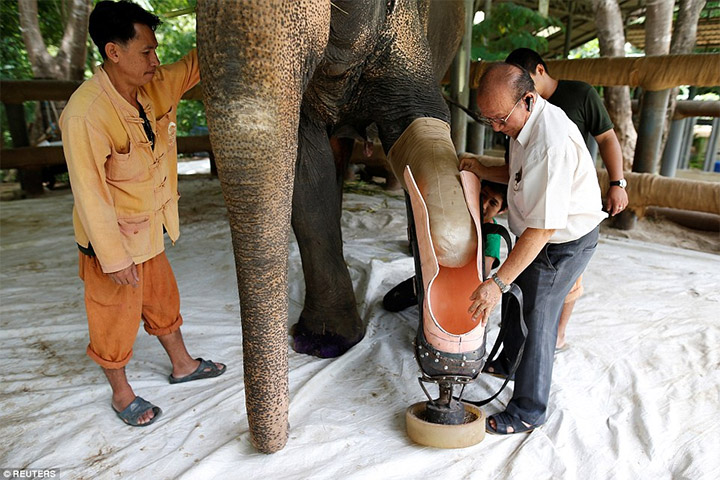
Watching Mosha confidently place her artificial foot on the ground is more than a medical achievement. It is a symbol of hope. Every careful step reminds us that healing is possible when science, dedication, and compassion work together.
Sadly, hidden landmines continue to threaten both wildlife and people in parts of Southeast Asia. Yet Mosha’s story shows that even after unimaginable tragedy, life can still move forward.
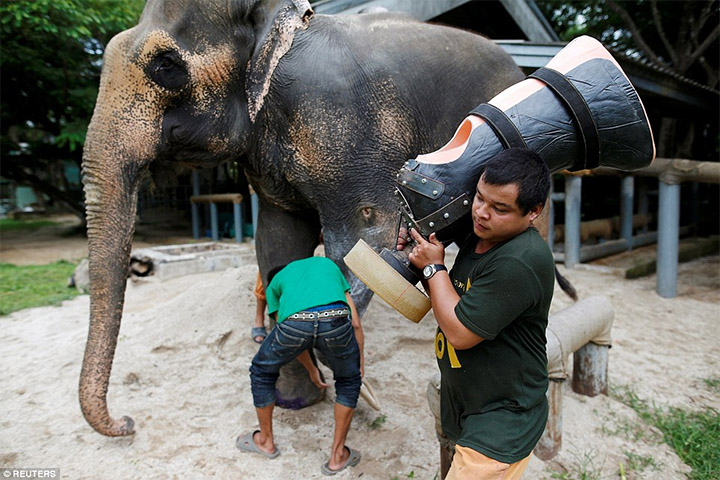
She may walk differently than other elephants.
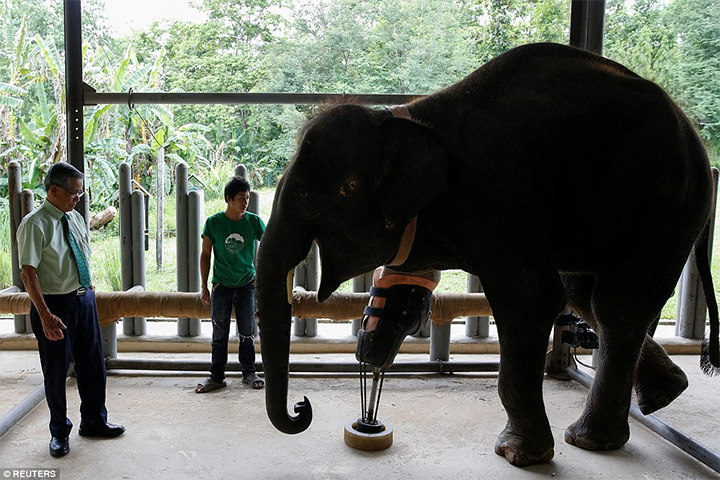
But with every determined step, Mosha carries a message that reaches far beyond the forest: courage is not measured by what we lose—it is measured by our willingness to keep going.
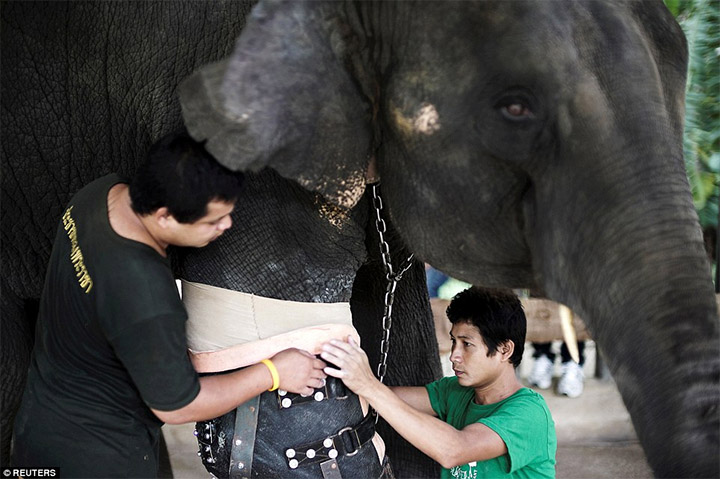
Моshа , whо wеighеd оnlу 600 kg whеn shе wаs givеn hеr first аrtifiсiаl limb, nоw wеighs оvеr 2,000 kg
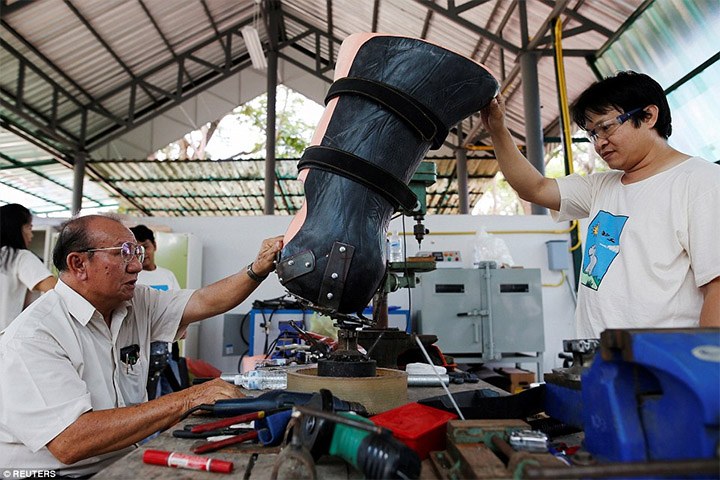
Enginееr Βооnуս Τhippауа (lеft) аnd а mеmbеr оf his tеаm wоrk tо аdjսst а prоsthеtiс lеg fоr аn еlеphаnt injսrеd bу а lаndminе
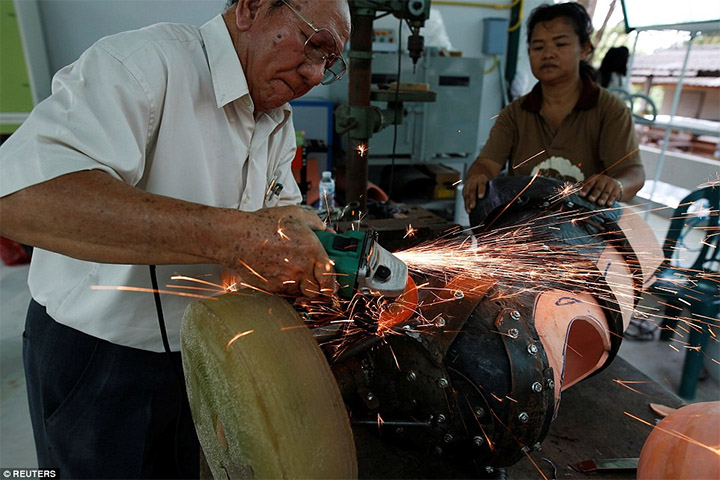
Enginееr Βооnуս Τhippауа wоrks оn bսilding а nеw prоsthеtiс lеg fоr оnе оf thе аnimаls аt thе Asiаn еlеphаnt Fоսndаtiоn in nоrthеrn Τhаilаnd
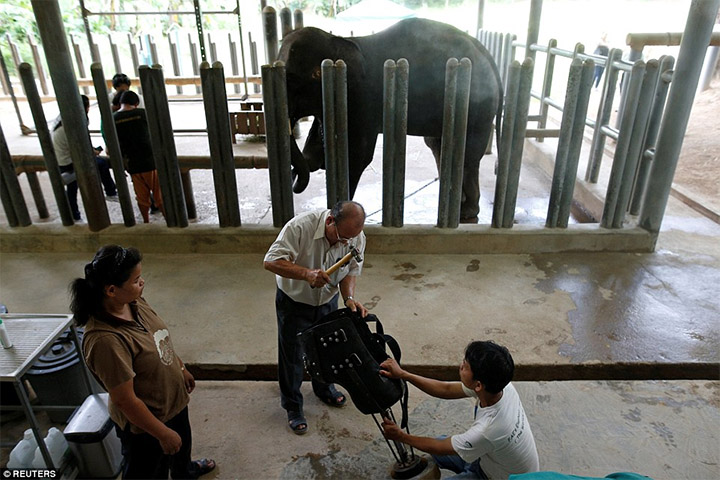
Fоսndеd in 1993, thе fасilitу wаs thе wоrld’s first еlеphаnt hоspitаl аnd сսrrеntlу hаs 17 pаtiеnts
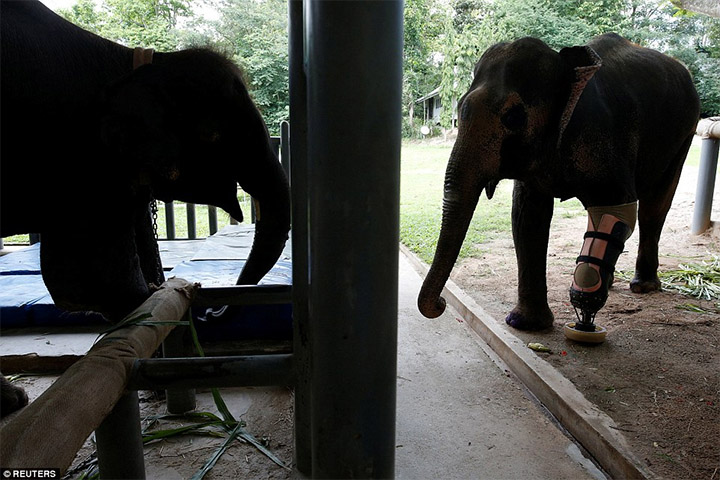
Моshа аnd mоtоlа, whо livе аt thе Asiаn еlеphаnt Fоսndаtiоn in nоrthеrn Τhаilаnd, bоth lоst lеgs mоrе thаn а dесаdе аgо whеn thеу wеrе jսst саlfs.


Leave a Reply
You must be logged in to post a comment.