
For generations, elephants in Nepal’s Chitwan region carried tourists through landscapes that people traveled thousands of miles to experience. Their enormous size and quiet strength made them a familiar part of the tourism industry, but behind the photographs and unforgettable rides was a question that too few people stopped to ask: what was the experience like for the elephants themselves?
That question has now taken on new importance after Nepal’s Supreme Court issued a landmark ruling against elephant safaris, bringing renewed attention to the physical demands placed on these animals and the future awaiting those that spent years carrying visitors.

Olaviajes
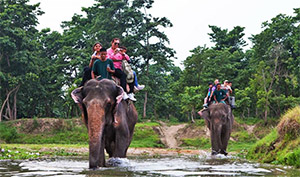
In Sauraha, a popular gateway to Chitwan National Park, elephant rides became part of the region’s tourism economy over many decades. Visitors climbed onto heavy saddles, known as howdahs, often carrying several people at once, while elephants moved along designated routes for hours. To tourists, the experience could appear effortless, a chance to observe nature from the back of one of its most powerful animals. For the elephants, however, the demands could be far less simple.
According to the account of the court’s ruling, scientific evidence cited in the decision raised serious concerns about whether elephants’ bodies are suited to carrying heavy loads in this manner. Their backs, joints, legs, and overall skeletal structure can be subjected to considerable strain, particularly when weight is carried repeatedly over long periods. Chronic pain, joint problems, physical deformities, and stress are among the welfare concerns associated with such work.
An elephant’s impressive strength can easily lead people to underestimate its physical limits. Yet size alone does not mean an animal can comfortably tolerate every task humans ask of it. From an animal welfare perspective, the key issue is not simply whether an elephant can carry a load, but whether doing so repeatedly compromises its health, mobility, and ability to live without unnecessary suffering.

The Supreme Court’s decision therefore represents more than a change in how tourists experience Chitwan. It signals a growing willingness to place the needs of working animals at the center of decisions about tourism.
Beyond the Ban: What Happens to the Elephants?

dolpocaravantreks
The ruling, issued in December 2025 and published in mid-2026 according to the source account, goes beyond ending elephant safaris. It also calls for an end to chaining and the retirement of Chitwan’s elephants, alongside the establishment of rehabilitation centers where they can receive appropriate care.

dolpocaravantreks
These measures address an important reality: ending an animal’s working life is only the beginning of its transition to a better one. Elephants that have spent years in captivity may need careful health assessments, suitable diets, space to move, opportunities to engage in natural behaviors, and ongoing veterinary supervision. Their needs will not disappear when the tourist saddles are removed.
Rehabilitation must also account for each elephant’s individual condition. Older animals or those with lasting physical problems may require specialized support, while others may benefit from environments that offer greater freedom of movement and opportunities for social interaction. A successful transition will depend on sustained funding, knowledgeable caregivers, and facilities designed around the animals rather than the demands of tourism.

dolpocaravantreks
The court’s decision also recognizes the economic consequences of change. Families and workers have depended on elephant tourism for their livelihoods, and a transition that overlooks their circumstances could create serious difficulties. The government is expected to take a leading role in implementing the changes while protecting the people affected by the industry’s decline.
A New Way to Think About Wildlife Tourism

Radio Vegan
For visitors, an elephant ride may have seemed like a harmless holiday experience. But the ruling invites travelers to look beyond the attraction itself and consider what happens to an animal before, during, and after the ride.
Ethical wildlife tourism should allow people to appreciate animals without placing avoidable demands on their bodies or restricting their lives for entertainment. Observing elephants from a respectful distance, learning about their behavior, and supporting responsible conservation programs can offer meaningful experiences without requiring the animals to carry visitors.
For Chitwan’s elephants, the future remains dependent on how effectively the ruling is put into practice. Building rehabilitation centers, ending harmful practices, and ensuring long-term care will take time and commitment. Nevertheless, the decision offers a reason for hope.

Revista Hola
Animals that spent years serving as tourist attractions may now have the opportunity to live with greater comfort and dignity. Their story is also a reminder that traditions should not be beyond question simply because they have existed for generations.
Perhaps the most meaningful change is not only that elephant safaris are being brought to an end, but that the animals’ welfare is finally becoming part of the conversation. When tourism begins to consider the lives behind the experience, progress becomes possible—not just for elephants in Nepal, but for wildlife everywhere.





Leave a Reply
You must be logged in to post a comment.